Where vertical masts make sense
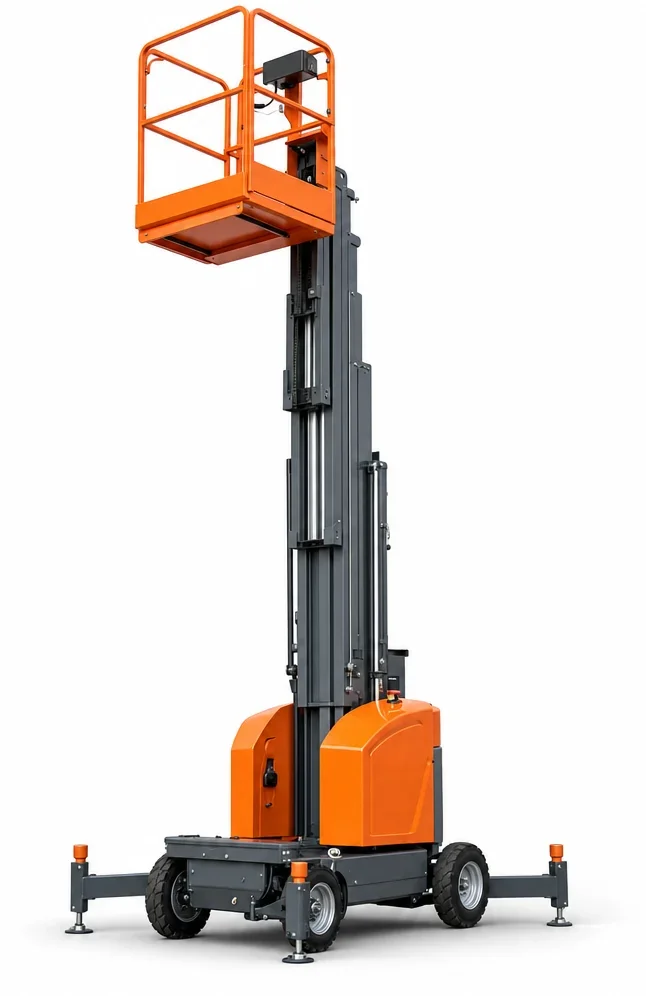
A vertical mast lift fits when the machine can sit below the task and raise the platform straight up. Typical examples include lighting, signage, or equipment mounted above aisles, production lines with defined floor pockets, and lobby or corridor work where turning room is limited.
If the job requires horizontal outreach or clearing obstructions, review /articulating-boom-lift-rental/ or interior platforms at /electric-scissor-lift-rental/.
Greenville site considerations
Climate‑controlled manufacturing floors and distribution aisles in the area favor compact, non‑marking equipment. Door thresholds, expansion joints, and transitions to mezzanines or docks can be the limiting factors, not just machine width. Measure the tightest door, corridor, and elevator car if vertical transport is required.
Stability and surface
Vertical masts assume a sound, level slab at the work position. Sloped entries or uneven patches near loading doors can block access. Wet conditions tracked in from exterior yards may affect traction; the selected unit’s instructions and site procedures govern work limits.
Productivity notes
- Look for platform height that meets the task without frequent repositioning.
- Check weight and footprint against sensitive floors or finished surfaces.
- Plan a staging area that keeps aisles open for forklift traffic.
For small outdoor tasks on uneven ground, a rough‑terrain scissor or compact articulating boom may be a better fit; see /rough-terrain-scissor-lift-rental/.
Related resources
- Aerial options overview: /aerial-lift-rental/
- Material handling support: /forklift-rental/ and /telehandler-rental/
- Contact: /contact/