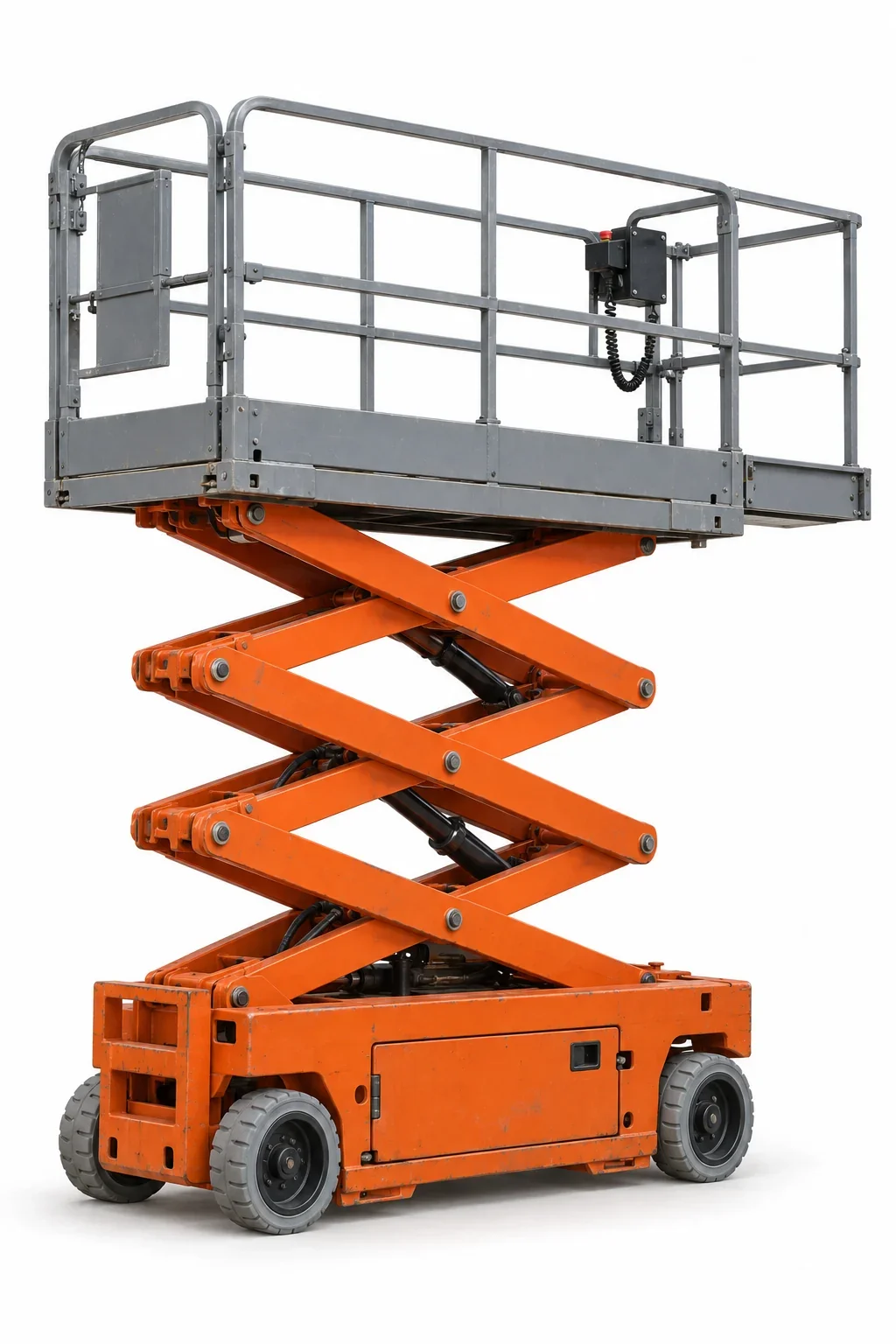
Match platform height to ceiling features
- Start with fixture elevation, not just roof height. Lights, cable trays, fire lines, and air drops set the true working point.
- Allow clearance above the platform for maneuvering around struts and hangers common in industrial interiors.
Fit the route from dock to work bay
- Machine width: Confirm the tightest doorway and the narrowest pinch point between columns or pallets. Compact slab units are designed for interiors, but a single bottleneck can rule out a size class.
- Machine length and turning radius: Check end‑of‑aisle turns where racking meets cross‑aisles in local distribution buildings.
- Floor loads: New slab pours usually support indoor lifts well, but older sections and mezzanines may have limits that control machine selection.
Why electric indoors in Greenville
- Quiet operation suits running shifts and inventory cycles.
- Non‑marking tires protect sealed floors typical of climate‑controlled spaces.
- The regional climate pushes a lot of maintenance indoors during rainy stretches; battery units reduce exhaust concerns around HVAC intakes.
When an electric scissor isn’t the right fit
- If you cannot park directly beneath the task due to machinery or lines, consider outreach equipment at /boom-lift-rental/.
- If the route includes gravel yards or uneven exterior approaches, compare outdoor platforms at /rough-terrain-scissor-lift-rental/ before committing to a slab machine.
Safety note
Actual site rules, the unit’s instructions, and building procedures govern elevated work. Verify clearances, floor capacity, and overhead hazards before mobilizing equipment.