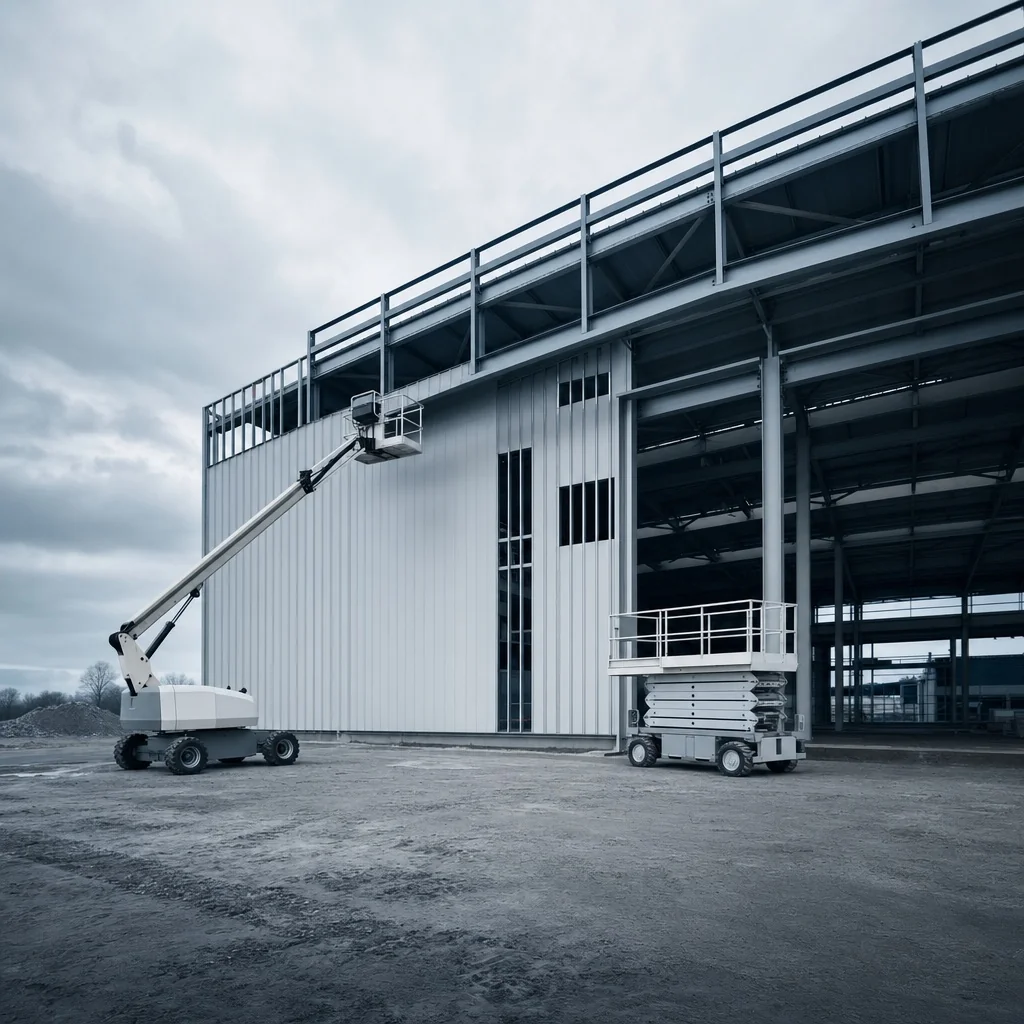
Start with the work geometry
- Can the machine sit directly below the task? Scissor lifts go straight up; outreach is limited.
- What is the platform height and working envelope needed? Note overhead obstructions like sprinklers, conveyors, and mezzanines common in industrial sites.
- How much material rides up with the crew? Platform capacity and deck extension length narrow models quickly.
Local floor and site conditions change the choice
- Slab floors: Many Greenville warehouses and production areas use smooth, finished concrete. Electric slab scissors with non‑marking tires and tight turning radii fit aisles and staging lanes.
- Outdoor grades: Rolling terrain and variable subgrade around the Piedmont foothills can leave unfinished jobsites uneven. Rough‑terrain scissor lifts with wider stance and higher step‑in heights address ruts and mild slopes.
- Weather: Frequent wet days in the regional climate can influence traction expectations and the need for weather‑resistant platforms when maintenance can’t wait for dry windows.
Measurements that matter
- Platform height vs. working height: Match ceiling elevations, racking tops, or panel lines and confirm clearance below duct and pipe runs.
- Machine width and length: Check doorways, interior turns, and trailer dock thresholds. Many slab units are built to pass through standard double doors; verify before mobilization.
- Floor load and point loading: Older buildings and mezzanines may have limits. Weight plus wheel loading affects where a lift can stage.
Common Greenville use cases
- Commissioning and lighting upgrades in climate‑controlled facilities: See electric options at /electric-scissor-lift-rental/.
- Building envelope work, site utilities, and steel punch lists on uneven ground: Review outdoor units at /rough-terrain-scissor-lift-rental/.
- If outreach is required around obstacles, compare boom types at /aerial-lift-rental/ or go directly to /boom-lift-rental/.
Safety note
Exterior and elevated work depends on actual site conditions, the selected unit’s instructions, and project procedures. Wind exposure, ground support, and load limits govern what is appropriate on the day of work.