Define the job geometry first
- Power: list the equipment, starting watts, and running watts. Note any sensitive electronics on indoor lines.
- Lighting: map the footprint and mounting height. Identify shadows from racks, trailers, or structural steel.
- Position: can the generator or light tower sit below the task, or does it need to be staged out of traffic lanes?
How Greenville conditions change the comparison
The regional climate brings frequent wet periods and temperature swings that influence fuel choice, enclosures, and cabling routes. Outdoor staging often happens on compacted fill or gravel in the Piedmont foothills, so ground firmness and slope tolerance matter for towable towers. At large distribution or automotive sites, equipment moves continuously; cords and mast locations must account for drive aisles and dock activity.
Generators: sizing and placement constraints
- Power quality: indoor plant loads may call for units designed for stable frequency to protect controls.
- Venting and noise: interior circuits typically require generators positioned outside with suitable stand‑off from doors and intakes.
- Run time: long overnight cycles on remote lots favor larger tanks and weather‑resistant housings.
- Access: verify the route for a towable frame or skid through gates and around parked trailers.
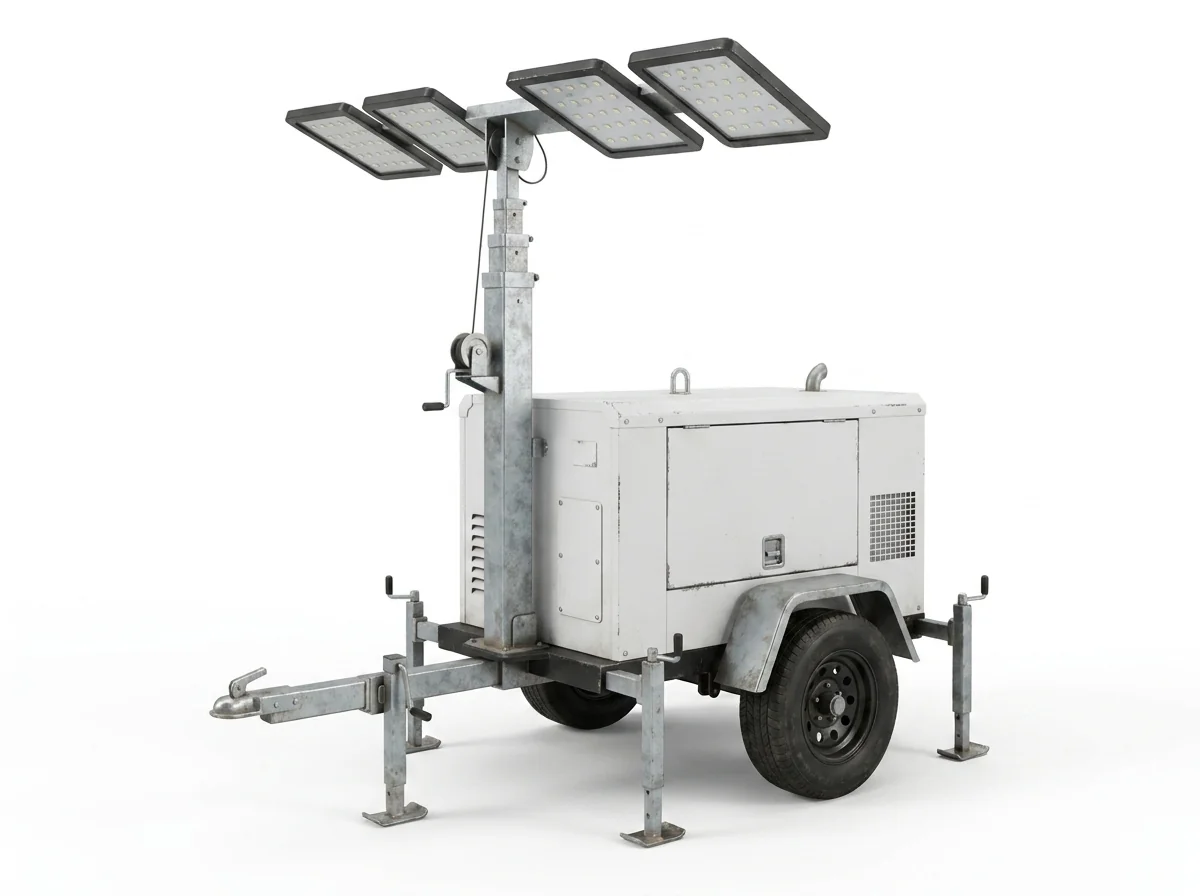
Light towers: coverage and terrain
- Coverage pattern: open yards near local distribution buildings need wide, even coverage with minimal glare at dock faces.
- Mast height and aiming: rolling terrain can create dark bands; confirm that mast height and tilt can overcome grade changes.
- Power source: choose between diesel towables for large outdoor footprints or electric options fed from a site panel for indoor bays.
Coordination with aerial work
If lighting is for elevated maintenance, combine the layout with the lift’s working envelope. For interior fit‑outs, see /electric-scissor-lift-rental/ or /vertical-mast-lift-rental/. For exterior structural work where towers share space with booms, review /boom-lift-rental/ and /articulating-boom-lift-rental/ to understand swing paths and keep-out zones.
What to confirm before you call
- Load list or lumen target with any critical circuits
- Ground condition, grade, and staging clearance
- Access route widths, gates, and turning radius
- Expected weather exposure and runtime window
Actual site conditions, the selected unit’s instructions, and local procedures govern placement and operation, especially for exterior or elevated tasks.