What defines the right telehandler class
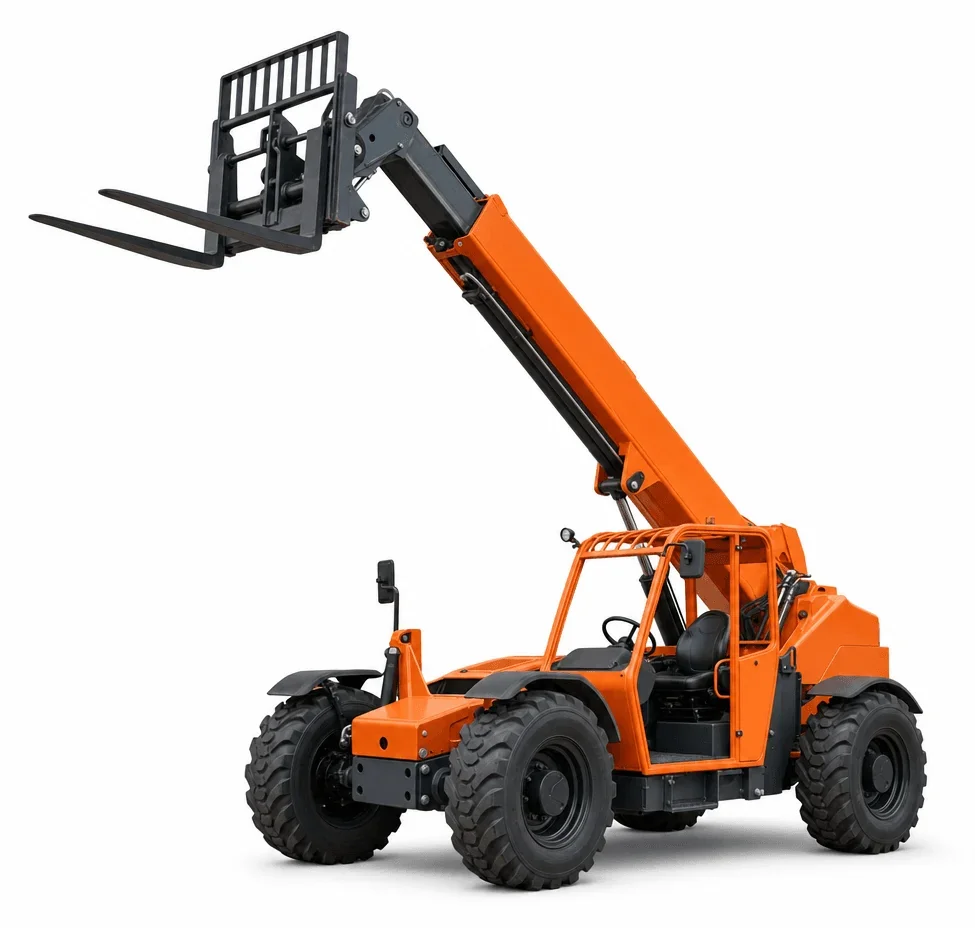
A telehandler’s capacity declines as the boom extends. Start with three numbers: load weight, required lift height, and horizontal reach to the landing spot. Then check the approach:
- Can the machine get close enough without crossing soft shoulders or steep transitions?
- Is there room to square up to the landing area for forks to align properly?
- Does the route from delivery to staging pass through tight gates or dock lanes?
Greenville ground and weather factors
Rolling terrain and variable rock depths mean exterior work often happens on uneven or partially improved surfaces. After rain, compacted stone can pump or rut. Rough‑terrain capability and tire selection are common on local jobs, but the selected unit’s instructions and site policies govern operation and limits.
Common applications in the area
- Palletized cladding and glazing crates to upper floors at commercial shells.
- Mechanical units to roof curbs where cranes are not practical due to access.
- Lumber and rebar bundles across yards with changing elevations.
Attachments and fork considerations
Different fork lengths and carriage styles change how close the machine must sit to the placement point. Confirm pallet dimensions, banding clearance, and landing space free of parapets or handrails that could restrict fork withdrawal.
Coordinating with other site equipment
Telehandlers often support aerial work by staging materials near boom or scissor set points. For platform access planning, see /aerial-lift-rental/, /articulating-boom-lift-rental/, or /telescopic-boom-lift-rental/. For enclosed storage near the landing area, consider /storage-containers-rental/.