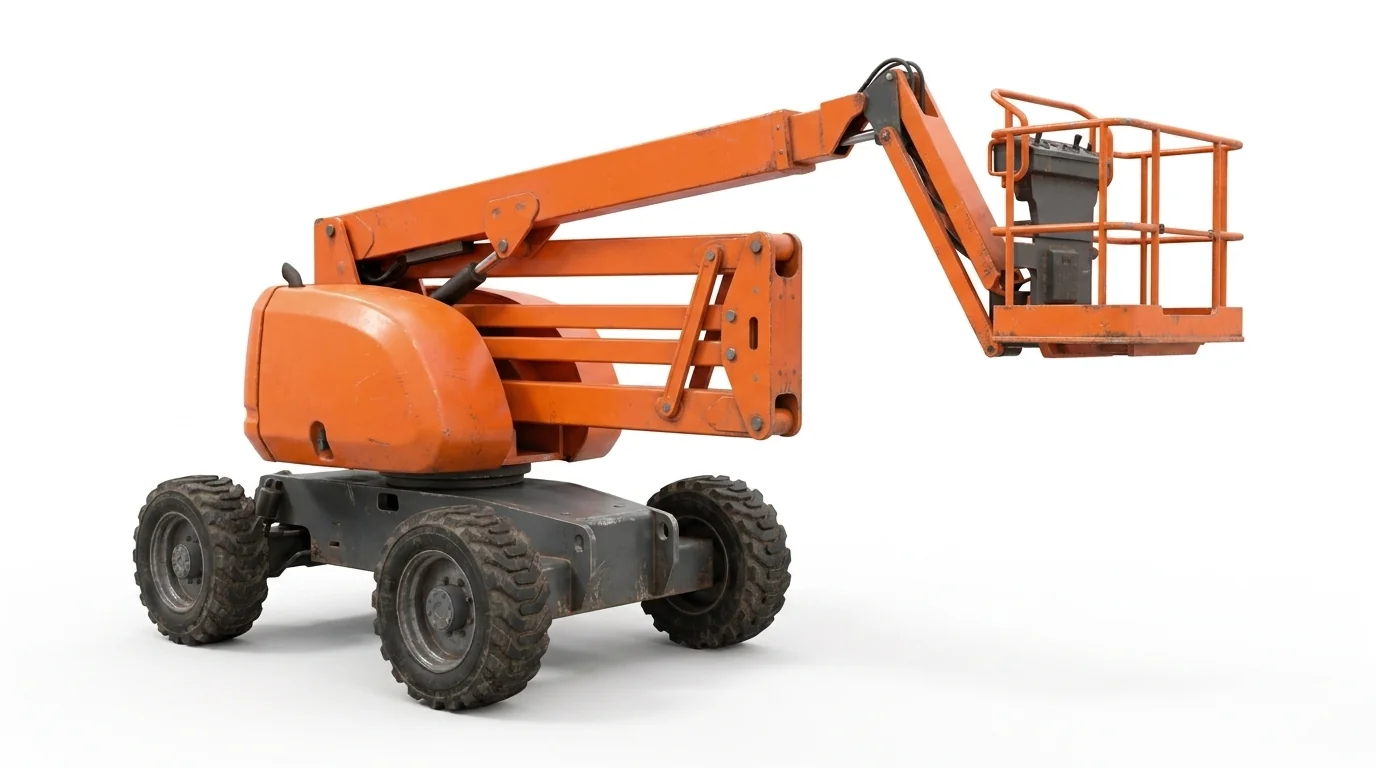
When an articulating boom solves the approach
Articulating booms matter when the work point hides behind parapets, conveyors, racking ends, duct chases, or canopy fascias. The key is the “up‑and‑over” path:
- Is there a fixed object between the stance and the task face?
- Does the platform need to rise, reach over, then descend into a pocket?
- Can the machine set up on stable ground without placing outriggers on questionable fill or steep cross‑slope?
If the answer is yes to any of these, an articulating boom typically outperforms a straight boom for placement. For long, unobstructed exterior reaches, see /telescopic-boom-lift-rental/.
Greenville site factors that change the pick
Local distribution buildings and manufacturing yards often mix slab, compacted gravel, and areas of broken rock. Interior maintenance in climate‑controlled spaces favors electric or hybrid units with non‑marking tires. Outdoor steel work or façade repairs usually need rough‑terrain capability due to rolling grades and soft spots after rain.
Consider these constraints before settling on a size class:
- Platform target: Estimate the horizontal offset and clearance height to swing over pipe bridges or mezzanines.
- Ground profile: Walk the approach path for drainage swales, curb cuts, and utility lids.
- Power source: Electric for indoor air quality and finished floors; diesel for exterior range and duty cycles.
- Wind and weather: The regional climate brings frequent wet days; only the selected unit’s instructions and your site procedures set allowable conditions.
Typical articulating boom fit
- Indoor fit‑out around process equipment: compact electric articulating models reduce tail swing and aisle impact.
- Exterior building envelope: rough‑terrain articulating units handle uneven stone bases and turf edges.
- Plant utilities: up‑and‑over reach to valves and platforms shielded by pipe racks.
If obstructions are minimal and the task is high and straight out from the machine, compare options at /telescopic-boom-lift-rental/ or view the broader category at /boom-lift-rental/.
Access planning checklist
- Measure the narrowest gate, door, or pinch point on the route from staging to work.
- Note slab thickness transitions and ramps into loading areas.
- Confirm turning room for tail swing near racking, columns, and dock equipment.
For low‑height indoor work where a boom is excessive, consider /vertical-mast-lift-rental/.
Related resources
- Other aerial options: /aerial-lift-rental/
- Material staging support: /telehandler-rental/
- Site protection and crowd control: /temporary-fencing-barricades-rental/